


By Ethan Royer
Last month, we looked at how logging dramatically opens the canopy, making sunlight more available to the remaining trees. Timber Stand Improvement (TSI) is another way of managing sunlight, but it is typically less dramatic than logging. In addition to controlling competition for sunlight, TSI is also used to manage the species composition of a woodlot. It usually deals with trees that are too small to be marketable.
TSI is sometimes referred to as “pre-commercial thinning,” but it is more than that: other forestry activities such as invasive species control, crop tree release, and cutting vines fall under the umbrella of TSI. Though I've seen enough evidence to believe it pays off, locally there are only a few individuals who do it for hire (they can't keep up with demand), and many landowners lack the time or knowledge to do it themselves.
Why do TSI?
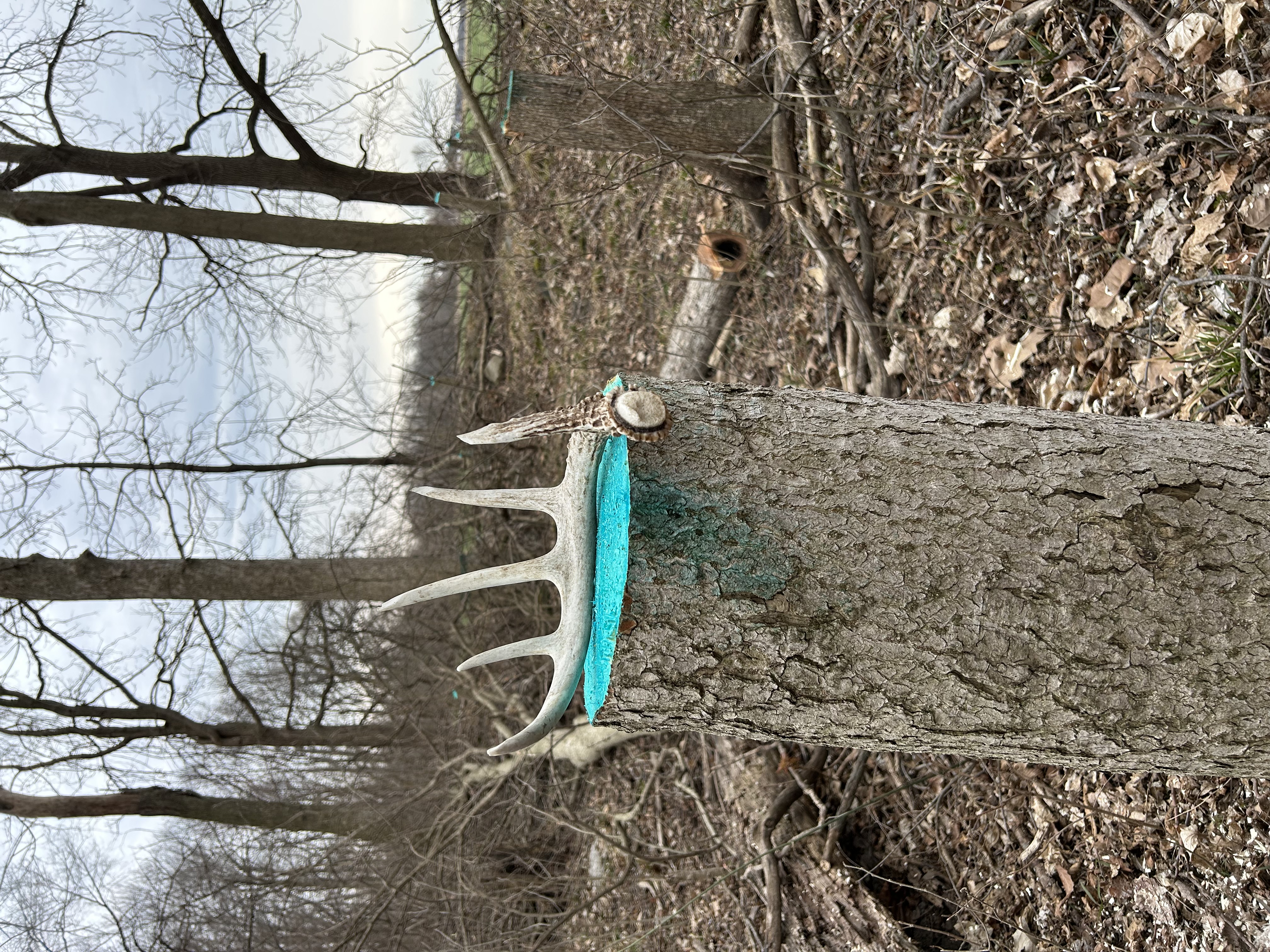
TSI involves both thinning and modifying the species composition of a woodland. Removing low- or no-value species and releasing the best trees pays off down the road. While we don't harvest timber on shares, a rule of thumb when cutting low-grade is that logging takes a third, trucking takes a third, and the owner gets a third of the timber value. This obviously varies depending on haul distance, hardwood versus softwood, and current markets. The logging and trucking rates remain the same when cutting high-quality timber; thus, the owner's portion of the income rises drastically when harvesting quality timber.
Invasives Control
Invasive species are a hot topic these days and for good reason. Many people get concerned about whether a species is native, non-native, or invasive. The native versus non-native debate is overblown; we benefit from plenty of non-native species, soybeans and pine trees for instance. I'm told that the state of Indiana figured out that pine trees are not native to this area, so they will no longer provide funding for tree plantings with pine trees in them. Pine trees are not native here, but they certainly aren't invasive; in fact, they don't even regenerate.
Mixed hardwood and pine plantings were the norm for years since the pine forced the hardwoods to grow tall instead of branching out. A forester told me he would still recommend a mixed planting if government cost-share would be out of the picture. Non-native species are not necessarily bad.
Invasive species are quite another story. They often spread rapidly, have few or no predators, and outcompete the native vegetation. A number of problematic species immediately come to mind when thinking of invasives: Bradford pear, Japanese honeysuckle, autumn olive, oriental bittersweet, tree of heaven, multiflora rose, and garlic mustard are common in Indiana. Most of these originated in Asia and did not sneak here: they were intentionally introduced, some as ornamentals and some for erosion control. Most of these species were believed to be non-invasive when introduced.
When it comes to controlling invasives, it appears we are losing the overall battle, but we can win some local skirmishes. You can go to the time and effort of controlling invasives on your property, but if your neighbors don't, you will likely be fighting a never-ending battle. Dealing with invasives is minor in some cases but daunting in others. It seems that invasives are considerably worse on sandy soil than on clay soil.
It also varies regionally because some county agencies promoted planting these species for erosion control or wildlife habitat. Many of these species are shrubs so you may wonder why it is important to deal with them; trees are taller than shrubs, right? The problem is that the shrubs are aggressive and reduce or prevent regeneration. In the case of Japanese honeysuckle, it is the first to green up in the spring and the last to lose its leaves in the fall.
Controlling invasives effectively requires herbicide. Sometimes a combination of mechanical and chemical control is used, but mowing or mulching alone is ineffective. Simply cutting off invasives often works like mowing hay—it seems to stimulate regrowth! Various chemical methods are used, including foliar spraying, stump treatment, and basal spraying. One Purdue University test employed a helicopter to spray glyphosate over an entire wood in November when the only remaining foliage was Japanese honeysuckle. This method doesn't sound cost-effective, but they reportedly achieved an 85% kill rate.
Even with chemicals, it is not a once-and-done treatment; resprouting can be expected and follow-up treatment is needed. Invasives control is labor-intensive. There are foresters that do it for hire, but most of their projects are partially or entirely government-funded. In some cases, invasives work is something that landowners can do themselves. Even someone who doesn't know an ash from an aspen can learn to recognize Japanese honeysuckle, autumn olive, or multiflora rose. The goal is control; eradication is an unrealistic expectation. Once invasives are under control, maintenance shouldn't take much effort. In some cases, controlling invasives may not be practical; we cut a tract last summer that was overrun with invasives, and the cost of treatment may have been higher than the timber value.
If invasives are present, they will respond to post-harvest sunlight with explosive growth. Invasive work should be done a couple of years before harvesting timber so that the seeds from the undesirable species are no longer viable by the time the soil is scarified by logging operations. A local forester did a study on seed viability and found that while some seeds remain viable for many years, the vast majority don't last more than a couple of years.
Pre-commercial Thinning
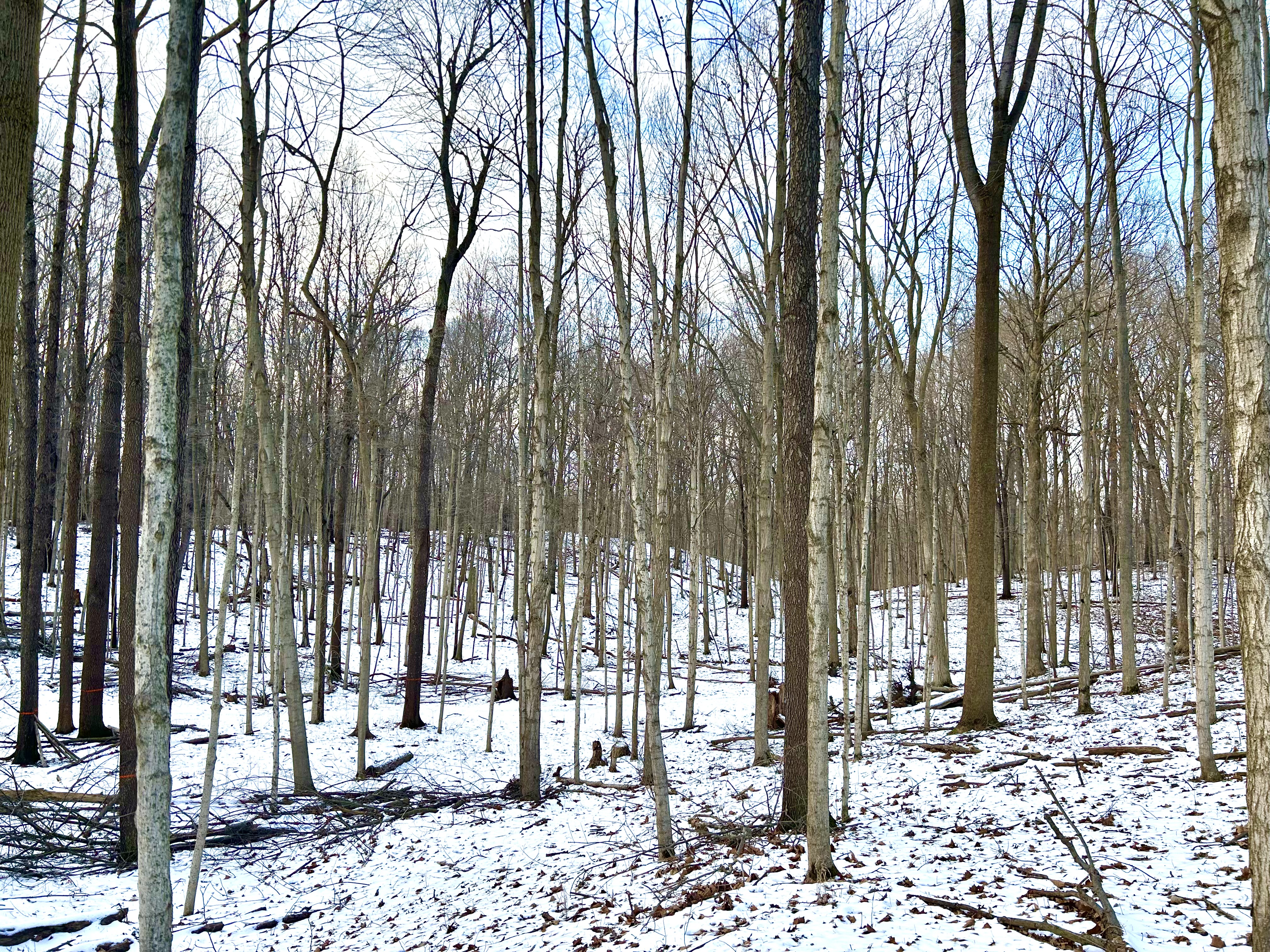
Assuming invasives are controlled, the two major objectives of TSI are thinning the stand and managing species composition. Pre-commercial thinning (cutting trees that are too small to be merchantable) is a neglected forestry practice. I see few woodlots that wouldn't benefit from thinning work in the mid-story or understory. The problem is that it costs money (or time if you do it yourself), and the return on investment is far in the future. It can be done at any time, but it's often done following a timber harvest since it's easier to know what to thin post-harvest than pre-harvest.
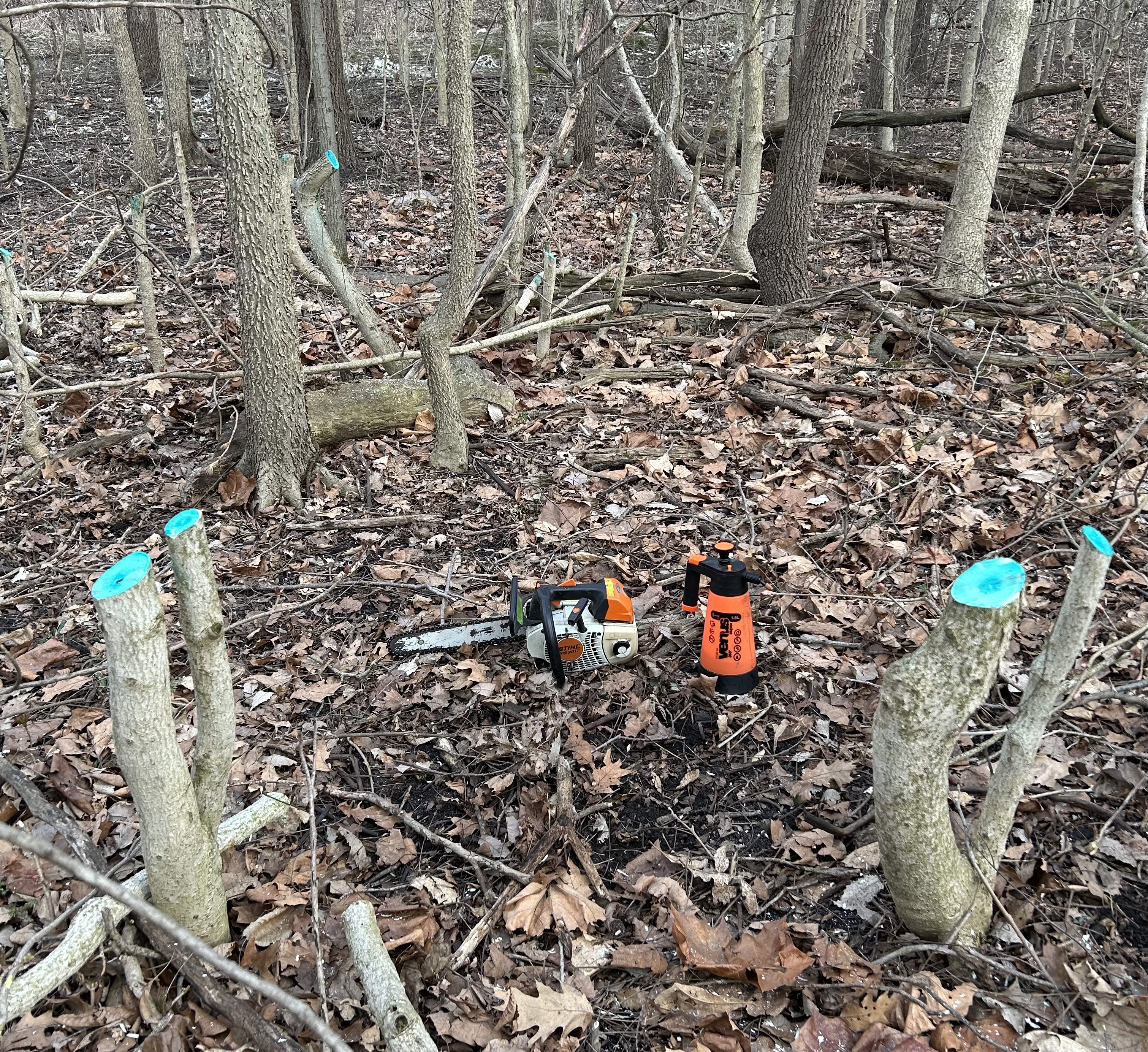
Culling undesirable species of small trees is something many owners could do for themselves, even with a limited knowledge of forestry and felling methods. There are several tree species that will never have any timber value, such as buckeye, ironwood, blue beech, crabapple, and pawpaw. A few other species, such as sassafras and black locust, often rot before they mature and rarely amount to anything. These should be culled to make room for something better. Then there are low-value species, such as cottonwood, aspen, beech, basswood, honey locust, and gum, that could be culled unless there is nothing better growing in the same area. These require a bit more discretion; I don't usually kill all of these.
Crop tree release is more technical and specific thinning. Think of an elm growing over a walnut; you cut the low-value elm to release the high-value walnut. It could even go as far as cutting an inferior walnut to release a superior walnut, but I've rarely encountered this scenario. There are generally low-value trees that can be cut to release the good trees. I hesitate to kill a walnut to release a walnut unless there are obvious reasons. We recently logged a woodlot that contained an immature walnut planting. The trees were too crowded, but I couldn't make myself thin them as much as I probably should have. I often see woods that have experienced too little disturbance and have an understory of beautiful but crowded sugar maples. Common sense tells us that they cannot all survive to maturity; many of them will be shaded out. In this case, it can be prudent to thin the maples with inferior form or other issues even if they are a desirable species.
Cutting Vines
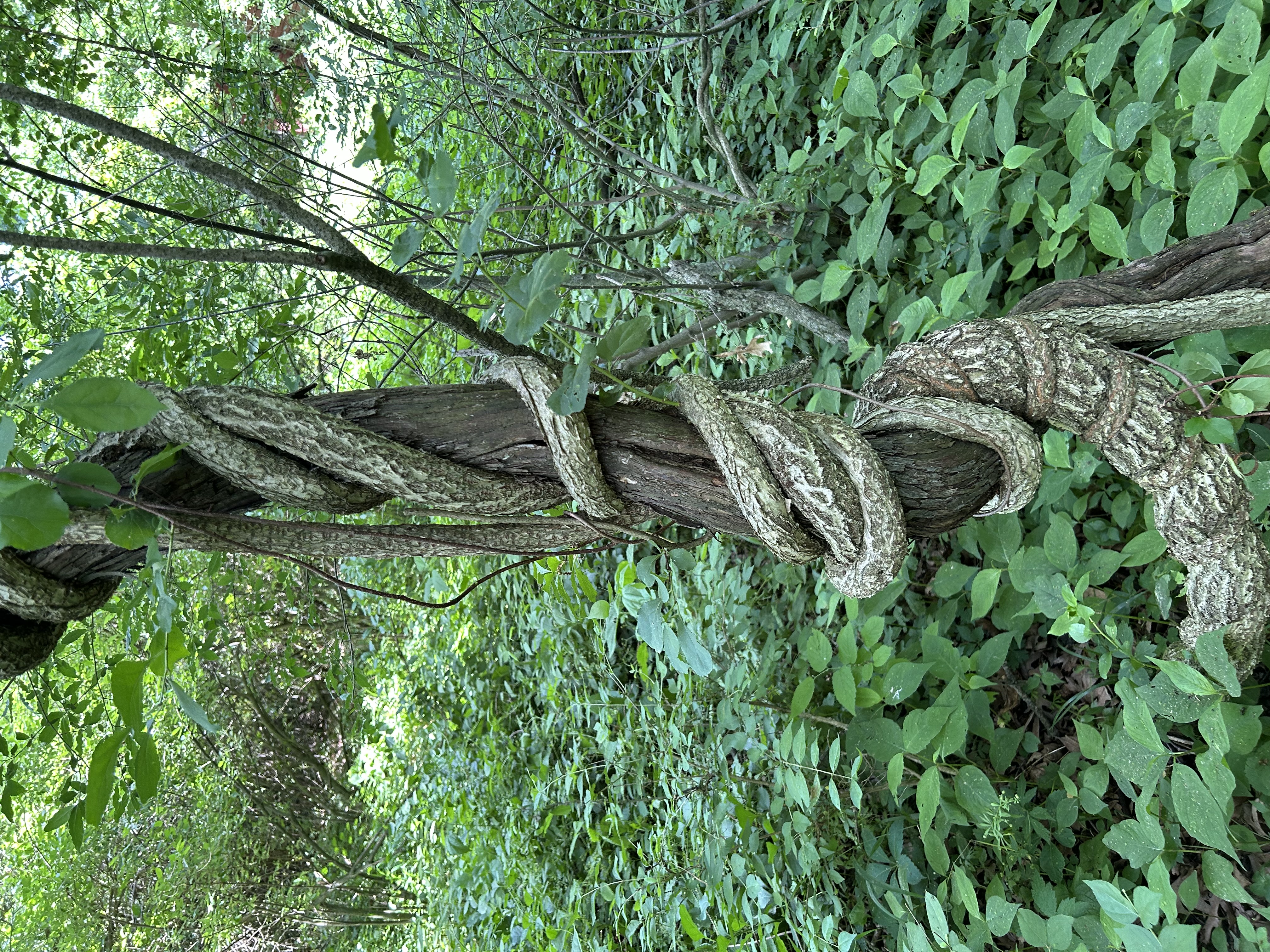
Any and all vines should be cut as part of TSI, and anyone can do it. Vines are harder on trees than you might think. Poison ivy, Virginia creeper, wild grape, and oriental bittersweet are common vines in Indiana. Bittersweet vines are the most problematic since they wrap around tree trunks and choke them, much like a boa constrictor its prey. Poison ivy is bad for trees and even worse for humans; if you see a logger who can't sit still in church, poison ivy could be the culprit. Virginia creeper and wild grape vines are not as sinister, but they rob sunlight and can pull over small trees. Grape vines also create a hazard when felling timber since they can tie several treetops together. Felling trees with connecting vines can break the tops out of nearby trees, sometimes landing them near the stump of the felled tree.
Grape vines are hard to kill. I recommend cutting the vine at shoulder height and again near ground level. That way if the vine stump resprouts, it cannot climb the dead vine back up the tree. I have tried spraying grape stumps with little success, possibly because in the spring, when I have time for TSI, the freshly cut stump pumps so much sap that the spray is not absorbed. Follow-up inspection showed only the very tip of the stump had died, and numerous sprouts were shooting off the stump, looking for some tree to torment. It may be more effective to use a basal spray to chemically girdle the vine instead of cutting and spraying, but I have not yet tested this theory.
Tree Planting
I don't recommend planting trees in the woods except in rare situations. Planting a field with trees is a different story, but I've been told that the seedling survival rate is around 5% when planting in a woodland. I'm not sure why the survival rate is so dismal, but a few contributing factors are that the native vegetation may outcompete the transplanted seedlings, the surrounding trees shade them, deer eat them, deer rub them, rabbits girdle them, and the surrounding tree roots steal moisture. Planting trees in a large opening in a wood should have a better success rate, but a shotgun approach is still needed: plant a lot of trees in hopes a handful survive.
Tree Genetics
While we can change the species composition of a wood, there is little we can do to improve genetics. We logged for someone recently who had a vision for growing genetically superior walnut trees. He believes that walnut seedlings from the state tree nursery are genetically inferior because he suspects they are grown from walnuts sourced from big ugly yard trees. He was in the process of planting walnut seedlings in a field. Later, he intended to graft a twig from a genetically superior walnut tree into the established root system. He had an interesting method of harvesting these genetically superior twigs—he used a rifle to shoot down the twigs from nice trees in his woods.
I don't know how much genetics affects timber potential, but I doubt it's as big a deal as he hopes. I saw the trees he had flagged for twig harvesting, and it appeared that they had nice form partly due to where they were growing. I suspect that the surrounding environment has a greater influence on timber potential than genetics.
TSI is kind of like eating less and exercising more. It's something that everyone should do but nobody does. Ok, so a few do it; that's how we know it works. The results of good forest management are so noticeable that I'm impressed every time I see a woodland where TSI has been properly executed. What I'd really like to do is motivate you to do it yourself. Parts of it are not at all complicated. It does take effort, but so does anything else that is worthwhile.
Ethan Royer, of Royer Logging, lives with his family in northern Indiana and provides logging services in northern Indiana and southern Michigan. He can be reached at 574.849.0867.
This article was originally published in Plain Communities Business Exchange (PCBE). Reprinted with permission. To subscribe to PCBE, call (717) 362-1118 or visit https://pcbemagazine.com