


By Ethan Royer
Forestry is inexact, but it is still science. We may misinterpret the scientific evidence, and scientific wisdom might change slightly over the years as new threats appear, but there are principles that are unchanging. Precisely describing good forestry is well beyond both my ability and the scope of these articles. However, a landowner that has at least some degree of forestry knowledge is less likely to be taken advantage of by unscrupulous timber buyers. A landowner that tells an unknown timber buyer, “I don’t know anything about forestry, take whatever trees you want” is a sitting duck.
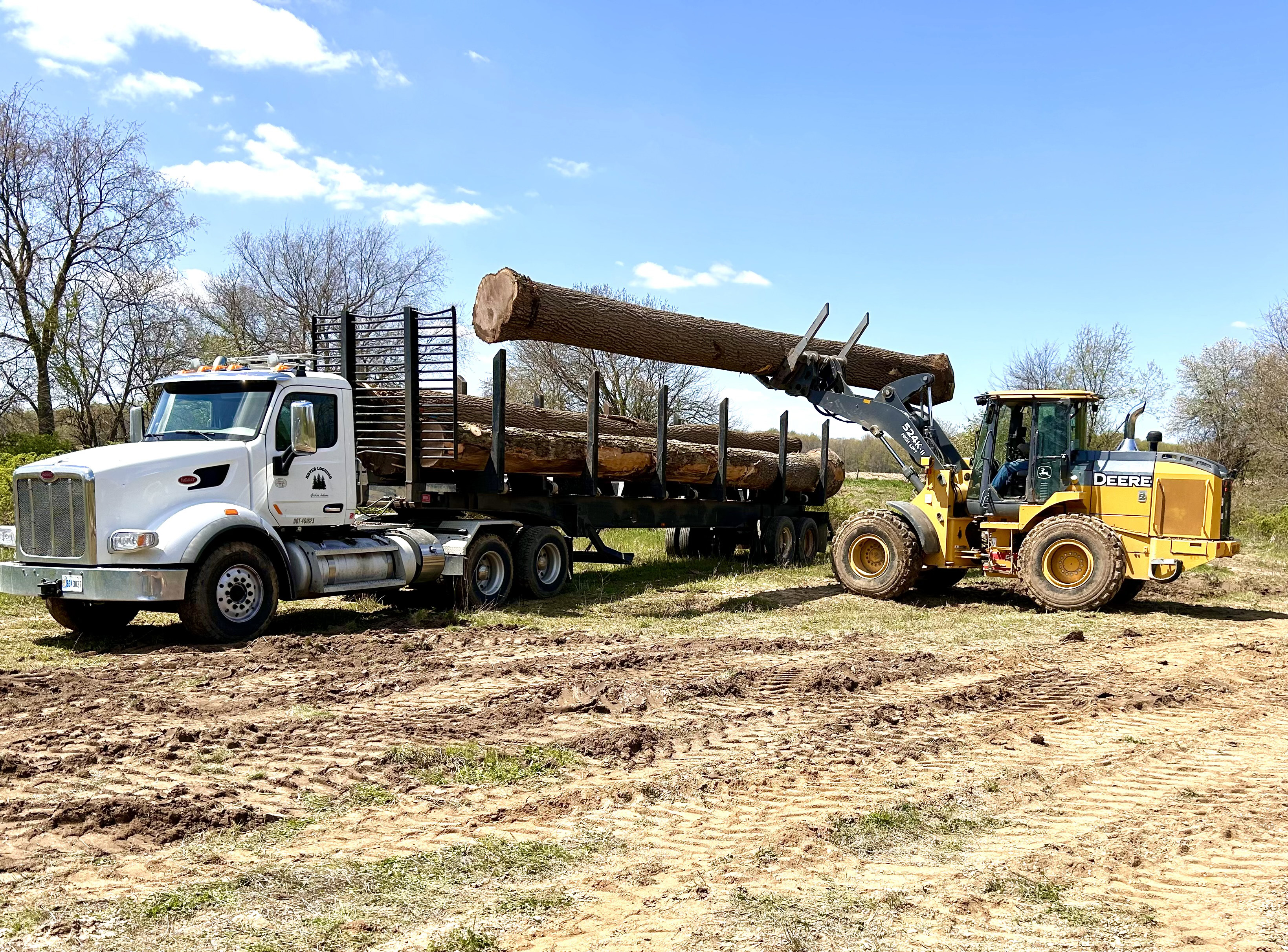
I am passionate about good forestry because I’ve seen the long-term results of both well-managed and mismanaged timber stands. Mismanaging the resources God has entrusted to us may come from ignorance, but it is still poor stewardship. I’m also passionate about good forestry because a well-managed stand yields a better return on investment, reducing the likelihood of it being converted to farmland or other uses. I do appreciate inexpensive food, and I acknowledge that there are certain tracts of woods that have little timber potential in the foreseeable future and may as well be cleared, but I can’t say that I like to see timbered land disappearing.
The term “timber buyer” has a negative connotation. I would like to see that changed. Too often, timber buyers don’t do what is best for the owner. A timber buyer may be honest and pay top prices, but if he takes the wrong trees or hires a careless logging crew, it is still a bad deal in the long term. To be fair, all of us (timber buyers, foresters, loggers) have probably done jobs that we are embarrassed to have our name associated with. This can be the result of misunderstandings, inexperience, site conditions, or a landowner’s disregard for good forestry, but that is not necessarily an indication of carelessness or greed. At risk of sounding idealistic, imagine a world where a landowner could call any timber buyer and could rely on him to treat the woodland as if it were his own.
Good forestry is an effort to manage woodland in a way that improves forest health and timber profitability. Many landowners have goals beyond timber profitability, such as wildlife habitat, carbon credits, or sap production. This may be fine to some degree, but I can’t make myself categorize radical deer habitat management, carbon credit concerns, or sap management as good forestry. I will be focusing primarily on the timber production aspect of forestry although the benefits from good forestry certainly do bleed over into other areas.
Carbon Crisis?
I have little knowledge of the long-term ramifications of the recent carbon credit programs, but I hear that it may be limiting forestry operations on some enrolled tracts. Without getting political, I think the carbon panic is misguided on several counts.
- Through the process of photosynthesis, plants convert carbon dioxide into oxygen. Is it safe to assume that if indeed there is more available carbon dioxide, then plants would respond with increased vigor and correct the imbalance? Certainly, man can upset the balance in localized areas—think big city smog—but is that really overriding God’s balance mechanisms on a worldwide basis? I have read that plants respond to increased sunlight exposure by producing a higher number of stomata in their leaves; that seems logical. But I also heard of one study that found that the number of stomata in Elm leaves are lower now than they were long ago. The authors of the study were proposing that, due to the supposed increase in available carbon dioxide, plants now require fewer stomata than they once did. I am skeptical of such studies since they may be interpreting the data to best suit their worldview. Are the Elm leaves different due to increased carbon dioxide, or is it because the Elm of today are different anyway because they’ve adapted to survive Dutch Elm Disease? I don’t pretend to be a scientist, and I’ve heard very little discussion on this topic. I would be interested in hearing what others think about this.
- Even if the idea of increased carbon in the atmosphere is valid, do forestry operations negatively affect the carbon conversion rate? I can’t cite any scientific studies, but I think not. Unmanaged forests become stagnant as a small number of dominant trees shade out and/or slow the growth rate of the remaining trees. Logging will temporarily reduce the amount of carbon dioxide being converted to oxygen due to the sudden removal of the harvested trees. However, I have seen how quickly a woodland responds to increased sunlight following a harvest. I believe that in the long term, a managed woodland will convert more carbon dioxide than one that is left alone.
- If we go along with the assumption that there is a carbon problem, there is also the argument that the harvested timber sequesters carbon, often for many years, instead of releasing it back into the air as it would if it were left to rot.
Based on points 2 and 3, forestry operations should be seen as a great thing to the carbon-concerned crowd. In all reality, environmentalists should be applauding loggers—what an idea!
Marking Timber
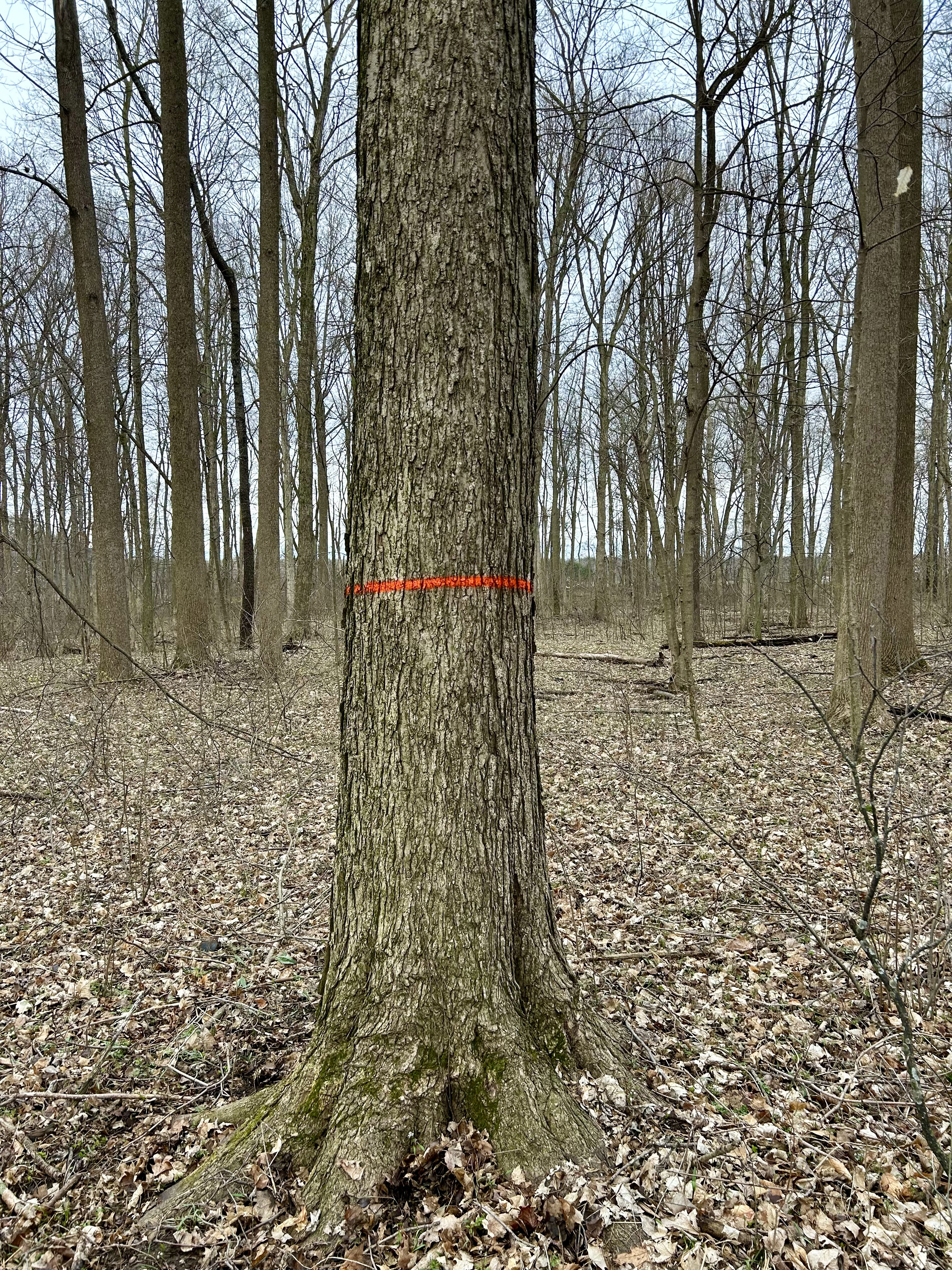
When I mark timber, I like the landowner to be with me at least part of the time. Explaining sound forestry and why I’m marking certain trees and leaving other trees builds trust. It is much better to show the owner why you will be cutting certain trees while the trees are still there rather than having him point accusingly at a stump and ask why you cut that tree. It’s not as simple as marching through the woods and marking the largest 15% of the stand.
For the most part, the condition of the woods lets us know what trees to mark for harvesting. Landowner goals affect what we mark, but many owners don’t understand forestry and may have some misconceptions that should be corrected. I recommend to owners that they harvest the trees that should be removed to improve their stand of timber for the long term, not what yields the most money now. This can be a tough sell because this “continuous improvement” method usually yields low income from the initial harvest, since the low value trees should be cut while the quality trees are left to mature. However, if forestry is done right, each harvest should produce better quality trees and more income than the previous harvest until the timber stand reaches its full potential.
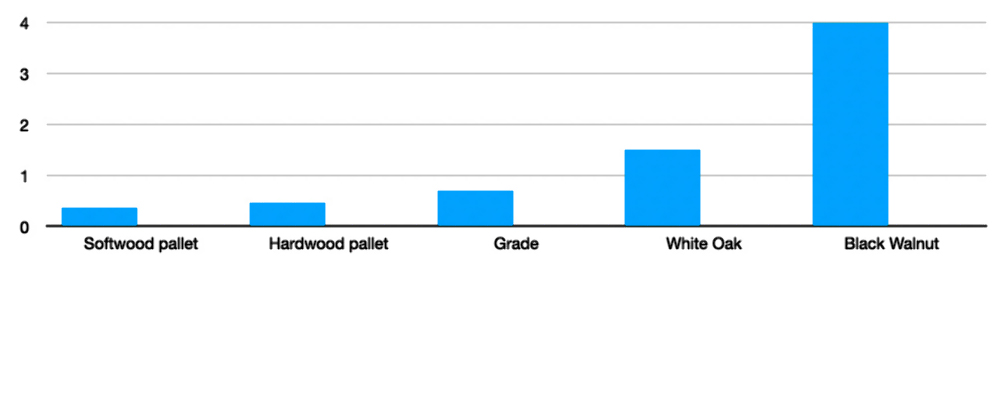
The opposite of this approach is high-grading. My unofficial definition of high-grading is, “Harvesting the quality timber (mature or otherwise) out of a woodland while leaving the low quality trees.” High-grading is common because it is tempting for many landowners to focus on the dollars-per-tree. Buyers like to offer a high dollars-per-tree figure since that makes them look good and makes the owner more likely to sell.
Taking the high-quality trees and leaving the low-quality trees obviously raises the dollars-per-tree figure in the moment. Landowner logic sometimes goes like this: Buyer A offered $10,000 for 100 trees while Buyer B offered $15,000 for 100 trees—obviously Buyer B is the way to go. Not so fast! Are you sure both buyers are bidding on the same 100 trees? This is a common game and one that irritates me. A landowner has no idea who has the better price if the bids are not for the same trees. Often the cheaper bidder may have done the more conscientious job of marking the right trees for good forestry.
Some time ago, I heard of an owner who received a number of bids for his timber. The bids had a $100,000 spread from lowest to highest. It was apparent that the bidders were not bidding on the same trees; it sounded like each bidder marked more (and better?) trees than the previous one. He thought the lowest bidder was a cheat, but I figure the lowest bidder marked it closest to how it should have been cut. Years ago, a veteran timber buyer told my dad, “You won’t buy much timber unless you high-grade.” Dad has proven him wrong, but his statement reveals an all-too-common philosophy.
The problem with high-grading is easy to understand. If an investor gets rid of his best-performing investments and keeps the under-performers, will he be successful? If a cattle producer consistently removes the best breeding stock out of his herd, can he expect his herd to improve over time? In the case of high-grading timber, it is more about species composition than genetics: harvesting all Walnut while leaving all Cottonwood has obvious results—a stand full of low-value trees. An immature Walnut is worth more than the best Cottonwood, but value doesn’t indicate maturity. If the focus is on getting the most value right here right now, the woodland will deteriorate with each harvest.
This long-range forestry improvement perspective shouldn’t be that difficult to understand; it is much the same as many other things in life. You can choose to take the reward up front or let it accrue through careful stewardship—but you can’t do both.
Trying to conscientiously practice good forestry can be frustrating if the landowner doesn’t have a proper understanding of how forestry works. Sometimes, we improve a woodlot by taking the low-grade and leaving it better for the future; this obviously doesn’t result in a big check for the owner, and he is disappointed. At the next harvest, he calls a different timber buyer, unencumbered with a keen forestry conscience, who high-grades the now-improved stand, undoing everything we did while impressing the owner with a nice check. This is discouraging and makes it tempting to lower our standards, but I’ll admit it is partly our fault. We need to do a better job of communicating to our clients why we do what we do. After an improvement cut, owners may conclude that there is little money in timber, so they clear it for other uses. Some time ago, this happened to a tract we had been managing. When we cleared the timber, the owner was amazed at the timber value that was there.
I mark very little of the timber I cut. This is fine—I’m busy enough—but there are some benefits to marking timber myself that I will be cutting. If a forester or timber buyer marks a woodlot, they often don’t know which crew will be logging it. Will it be a hand crew or mechanical crew? How much experience will they have? Some foresters hesitate to mark difficult or dangerous trees (roadside leaners, lodged trees, trees near buildings) because they don’t know the skill level of the crew or what equipment they will have. It is wise to refrain from asking a logger to cut trees he is uncomfortable with, but this means leaving trees that other crews could cut. I know what I can handle and mark accordingly—well, okay, sometimes I am more optimistic than realistic and mark trees that make me question my sanity later. I do enjoy figuring out what good forestry looks like in each situation; marking the right trees so that the woods is better at the next harvest is part of the challenge.
The person marking timber has a large responsibility in shaping the future of the woods. If a farmer makes a poor decision with his corn crop, he can generally try again the next year. If the wrong trees are cut, it will take years—possibly generations—for a wood to recover. The logging crew is usually praised or blamed for the post-harvest appearance of a wood, but a lot hinges on the person wielding the paint can ahead of them.
Again, forestry is an extensive topic. Marking timber plays an important role but there is much more to it. Next month, we will take a deeper dive into the science of good forestry.
Ethan Royer, of Royer Logging, lives with his family in northern Indiana and provides logging services in northern Indiana and southern Michigan. He can be reached at 574.849.0867.
This article was originally published in Plain Communities Business Exchange (PCBE). Reprinted with permission. To subscribe to PCBE, call (717) 362-1118 or visit https://pcbemagazine.com