


By Benuel Esh
First aid is emergency treatment for injury or sudden illness before medical care is available.
I am sure there are a lot of people out there who have applied first aid and have some good advice and tips to share—at least more than I do. While I have applied numerous band aids (I have three boys), thankfully I was never involved with major injuries. I will attempt to share some of the things I have learned over the years.
Head Injuries / Concussions
Due to a lack of knowledge, I will not specify procedures to determine the severity of concussions. I understand that a lot of minor concussions tend to be ignored and then result in a long recovery.
We had an experience with our dad. He fell only a short distance and bumped his head on the way down. He felt okay, so he never got it checked out. Several months later he started getting dizzy and had some problems with his balance. He went to the hospital and they immediately performed emergency surgery. He had blood on his brain. They drilled holes in his skull to drain the blood and remove the pressure. Thankfully, he recovered okay.
Head injuries tend to bleed a lot. I know of someone who received serious head injuries while felling trees. He got knocked over and ended up laying face down the hill. Where in most cases you should never move a victim until help comes, his employer was concerned that he could drown in his own blood, so he moved him so he was facing up the hill. The doctor said he probably saved his life.
Back Injuries
I am told you should never move someone with a back injury. The patient should be stabilized properly by first responders to minimize the risk of paralysis.
Cuts
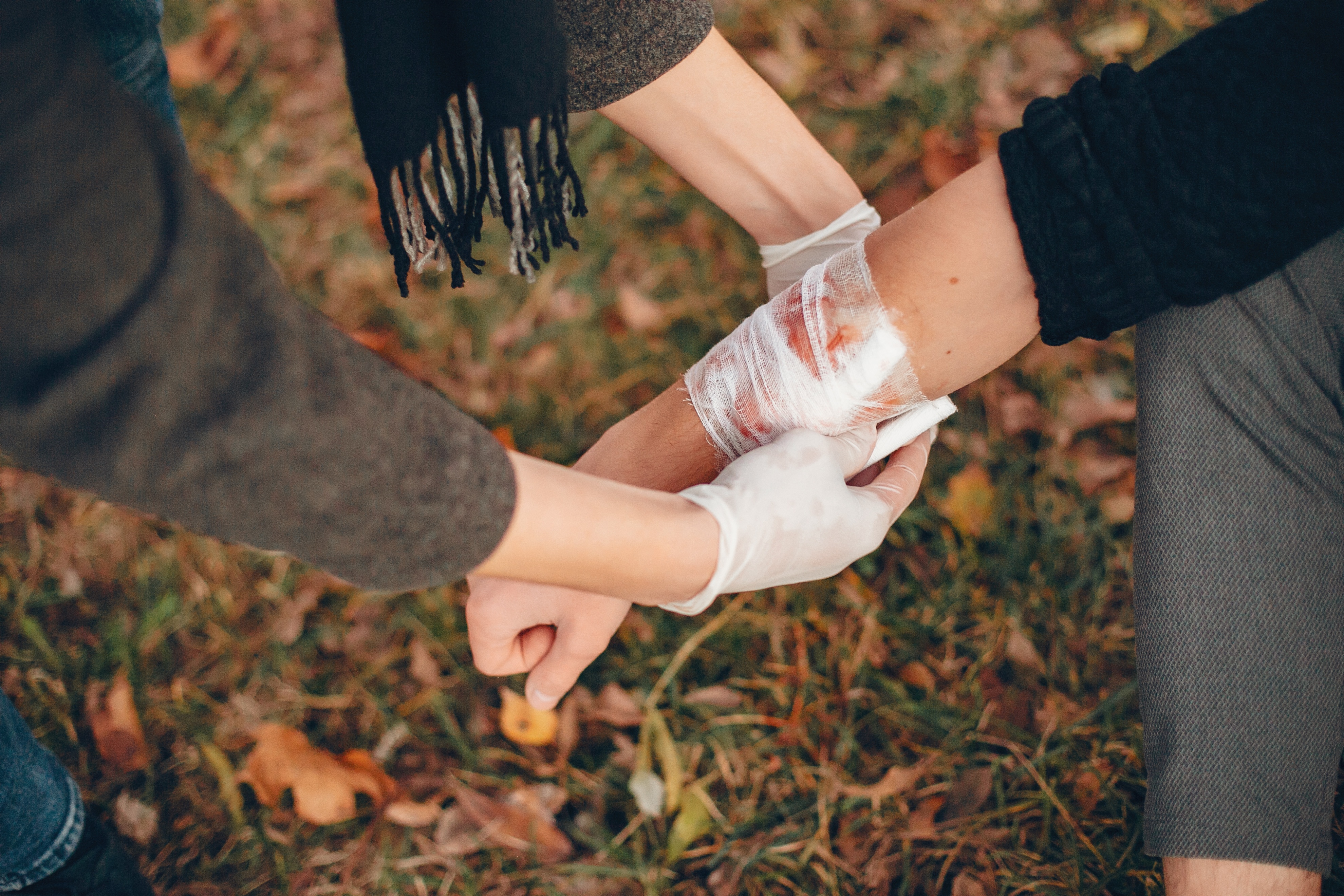
Cuts can be very serious depending on where the cut is and how deep it is. A tourniquet applied above the wound can save a life if it is on tight enough. Loggers may consider carrying a narrow leather belt with them. In the event of a cut, wrap the belt loosely above the cut, then insert your ax handle into a formed loop in the belt and spin the ax to form pressure to hopefully stop the bleeding.
Another thing worth mentioning is, if possible, place a blanket or something warm over the patient. This helps keep them from going into shock.
Be safe.
Benuel, Fox Run Timber