


By Benuel Esh
We always used the term “cable the tree.” I believe a lot more goes on than just attaching the cable to the tree. What we actually apply is rigging. The definition of rigging is: the ropes, chains, etc., of equipment.
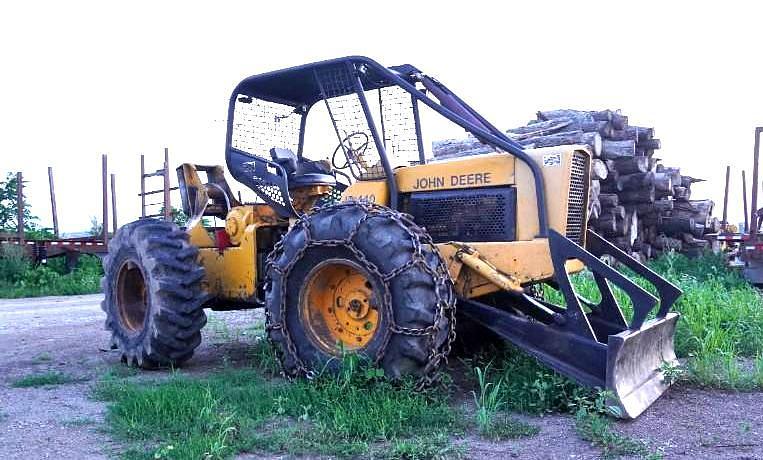
While there are many different ways of rigging a tree, I’m just going to touch on a few basics used in normal logging with a skidder.
Most times the tree is felled beside the skidder due to the length of the winch cable, terrain, obstacles, and other factors. This requires a skilled chainsaw and skidder operator. The skidder must always be parked on the opposite side from the way the tree leans—in the direction it is to be felled. Experienced loggers know about where to place the cable or rigging on the tree. Too high, and the skidder may not be able to pull fast enough. Too low, and there may not be enough leverage for the winch to pull it—or even worse, it may pull the tree off the stump.
Use clear signals that everyone understands. Sometimes it’s necessary to have a third person directing the skidder operator if his view is obstructed. Two-way radios work well too. The skidder operator should never engage the winch unless instructed by the chainsaw operator to do so.
It’s also very important to use certain cutting techniques according to the way the tree leans, the species, and other conditions.
Check for frayed cable or stretched choker links on a daily basis. Replace or repair damaged rigging before pulling or felling a tree near buildings or other hazards. It’s absolutely terrifying to watch your rigging fail. If you’ve never experienced it—good. I hope you never will.
Use strong tow straps for recovering vehicles, tractors, and other equipment. Chains can have a rubber-band effect when they break. Chains and hooks have killed bystanders and equipment operators. At least wrap the end of the chain that’s not being used around itself. This forces the chain to bunch and slows it down if it breaks. Tow straps are less cumbersome and easier to store.
Always respect the weight and pressures you’re dealing with. Take a second and third look. Could anything slip, roll over, break, fail, or come undone in some way? Get a second opinion if you’re skeptical.
Sometimes, when recovering a vehicle or machine in an unusual event, there can be some excitement that creates an unsafe environment. It’s important that everyone clearly understands the planned procedure. Repeat the plan several times. Don’t move too fast. One hasty move at the wrong time and place could be fatal.
So there you go, loggers—you never knew you were professional riggers, did you?